Medicare Annual Notice of Change 2026 — What You Need to Know
The Medicare Annual Notice of Change 2026 is the most important piece of mail every Medicare beneficiary will receive all year. If you have a Medicare Advantage plan or a Medicare Part D drug plan your insurance company is required by law to send you a Medicare Annual Notice of Change before October 1 each year. This document tells you exactly what will change about your Medicare coverage on January 1, 2027 — and reading it carefully could save you thousands of dollars. In this complete guide we explain what the Medicare Annual Notice of Change is, when it arrives, exactly what to look for in your notice, and what actions to take based on what you find. All information is sourced from Medicare.gov and CMS.gov.
Also Read —
- Medicare Open Enrollment 2026 Complete Guide
- Medicare Open Enrollment Checklist 2026
- Medicare Plan Changes 2026
What You Will Learn — Medicare Annual Notice of Change 2026
- What is the Medicare Annual Notice of Change 2026
- When does the Medicare Annual Notice of Change arrive
- What information the ANOC contains
- What to look for in your Medicare Annual Notice of Change
- How to respond to changes in your ANOC
- What happens if you do not read your Annual Notice of Change
- Does Medicare Advantage have a different ANOC than Part D
- Frequently asked questions about the Medicare Annual Notice of Change 2026
What Is the Medicare Annual Notice of Change 2026?
The Medicare Annual Notice of Change 2026 — commonly called the ANOC — is a document your Medicare Advantage or Part D drug plan must send you every year before October 1. The ANOC is a legal requirement under Medicare rules and every plan that covers Medicare beneficiaries must provide it.
The Medicare Annual Notice of Change summarizes every change to your current plan that will take effect on January 1 of the upcoming year. It is essentially a side-by-side comparison of your current coverage versus your new coverage — showing you exactly what is changing and what is staying the same.
The ANOC is critically important because Medicare plans can change significantly from year to year. Premiums, deductibles, copays, drug formularies, provider networks, and extra benefits can all change on January 1. Without the Annual Notice of Change you would have no advance warning of these changes until they affected your coverage in the new year.
The Medicare Annual Notice of Change is different from the Evidence of Coverage (EOC) — another document your plan sends annually. The EOC is a comprehensive document describing all plan details. The ANOC is a focused summary highlighting specifically what is changing compared to the previous year.
When Does the Medicare Annual Notice of Change 2026 Arrive?
Your Medicare Annual Notice of Change for 2026 coverage changes arrives before October 1 each year. Medicare law requires plans to send the ANOC before October 1 so beneficiaries have time to review their coverage changes before Medicare Open Enrollment begins on October 15.
Most plans mail the Annual Notice of Change in September — watch your mail carefully in late September and early October. The ANOC typically arrives in a plain envelope that may look like junk mail to the untrained eye. Do not throw it away.
If you have not received your Medicare Annual Notice of Change by October 1 contact your plan directly and request a copy. You can also find your plan’s coverage details on Medicare.gov/plan-compare.
Some plans offer electronic delivery of the ANOC — if you enrolled in electronic communications with your plan you may receive your Annual Notice of Change by email rather than postal mail.
What Information Does the ANOC Contain?
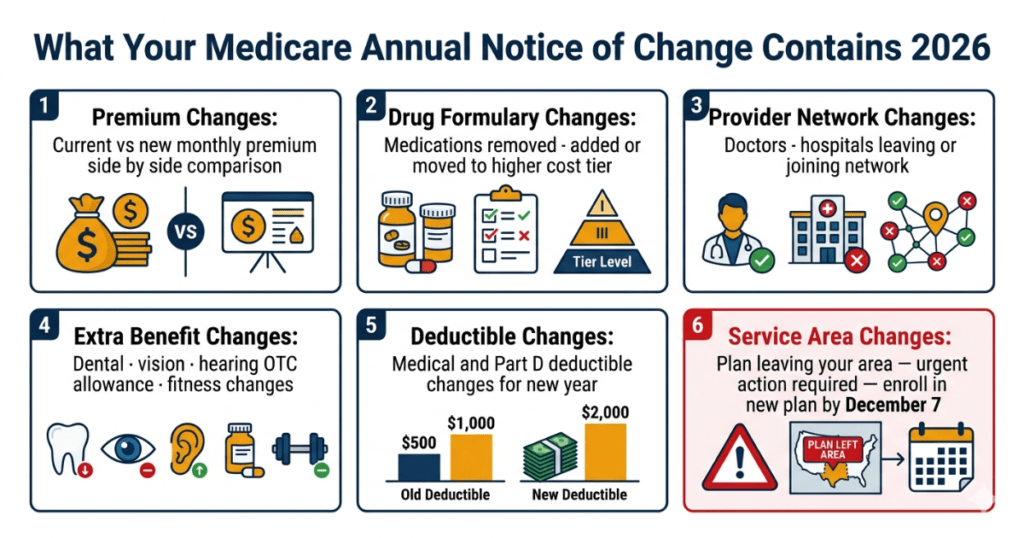
The Medicare Annual Notice of Change contains a comprehensive summary of every change to your plan for the upcoming year. Here is what your ANOC includes:
Premium Changes
Your ANOC shows your current monthly premium and your new monthly premium side by side. This is often the first number people look at — and premium increases are one of the most common reasons beneficiaries switch plans during Open Enrollment.
Deductible Changes
The Annual Notice of Change shows changes to your medical deductible and your Part D drug deductible. Both can increase from year to year.
Copay and Coinsurance Changes
Your ANOC shows changes to your copays for primary care visits, specialist visits, urgent care, emergency room, and inpatient hospital stays. Even small copay increases add up significantly over a year.
Out-of-Pocket Maximum Changes
The ANOC shows whether your annual out-of-pocket maximum is changing. A higher maximum means more potential financial exposure in the event of a serious illness.
Drug Formulary Changes
The Annual Notice of Change summarizes changes to your Part D drug formulary. This includes drugs being removed from coverage, drugs being moved to a higher cost tier, and new drugs being added. Drug formulary changes are among the most financially significant changes in the ANOC.
Provider Network Changes
Your ANOC includes information about changes to your provider network — doctors, hospitals, and specialists leaving or joining the network. Network changes can affect whether your current doctors remain in-network under your plan.
Extra Benefit Changes
The Annual Notice of Change summarizes changes to extra benefits including dental coverage, vision benefits, hearing aid allowances, over-the-counter allowances, fitness benefits, and transportation benefits.
Service Area Changes
The ANOC indicates whether your plan is changing its service area. If your plan is leaving your county or zip code your coverage will end on December 31 and you must enroll in a new plan during Open Enrollment.
What to Look for in Your Medicare Annual Notice of Change 2026
When your Medicare Annual Notice of Change 2026 arrives here is exactly what to look for:
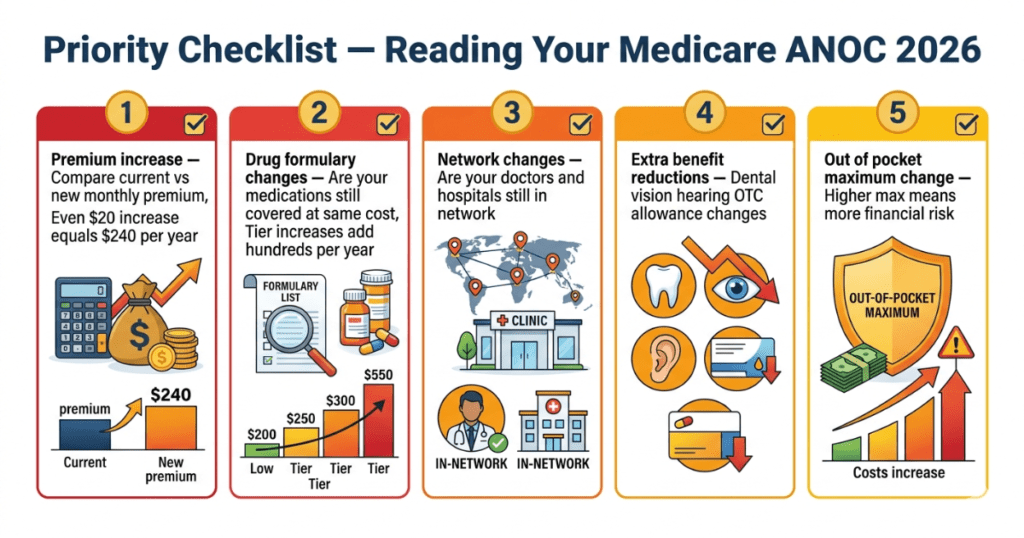
Priority Check 1 — Premium Increase
Turn directly to the section showing your monthly premium. Compare your current premium to your new premium:
- Is your premium staying the same?
- Is your premium increasing by $10 to $20 per month?
- Is your premium increasing dramatically — $50 or more?
Even a $20 monthly increase equals $240 per year. A $50 monthly increase equals $600 per year. Premium increases are one of the strongest signals that you should shop for alternatives during Open Enrollment.
Priority Check 2 — Your Medications
The drug formulary section of the Annual Notice of Change is often the most financially impactful. Look specifically for:
- Are any of your current medications being removed from the formulary entirely?
- Are any of your medications moving to a higher cost tier — from Tier 2 to Tier 3 for example?
- Are any prior authorization or step therapy requirements being added to your medications?
A single medication moving from a $10 copay to a $100 copay represents $1,080 in additional annual drug costs. Drug formulary changes deserve careful attention.
Priority Check 3 — Your Doctors and Hospitals
Check the network change section to see if your primary care doctor, specialists, or preferred hospital are affected. If any of your key providers are leaving the network you need to either:
- Switch to a plan that includes your providers
- Or decide whether you are willing to change providers
Priority Check 4 — Extra Benefits
Review changes to dental, vision, hearing, and OTC allowances. Were your dental benefits reduced? Was your OTC quarterly allowance cut? These reductions directly affect your out-of-pocket costs for care you need.
Priority Check 5 — Out-of-Pocket Maximum
Check whether your annual out-of-pocket maximum is increasing. A higher maximum means you could pay more in a serious illness year. Compare the new maximum against other available plans.
How to Respond to Your Medicare Annual Notice of Change 2026
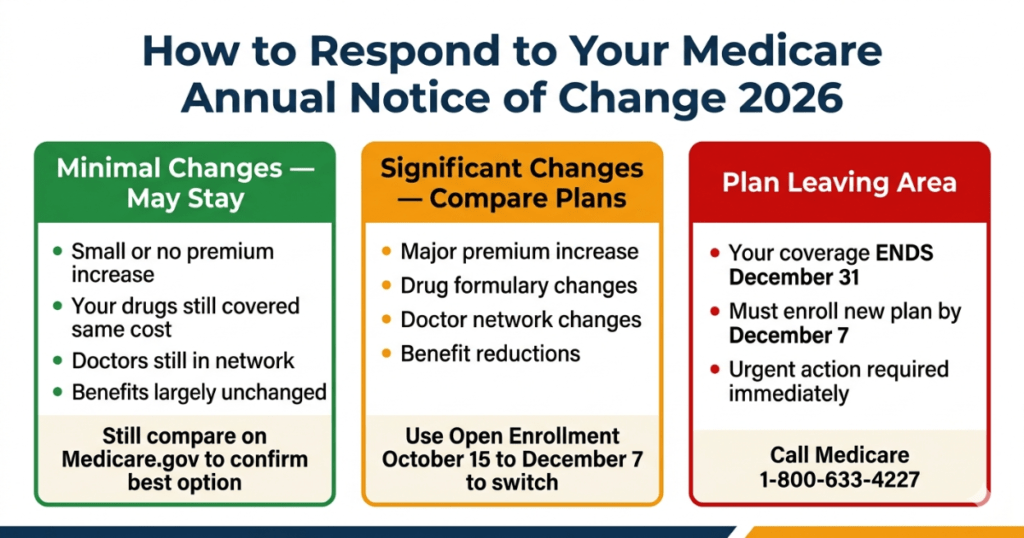
After reading your Medicare Annual Notice of Change 2026 take one of these three actions:
Action 1 — No Action Needed
If your ANOC shows minimal changes — small or no premium increase, your medications still covered at similar costs, your doctors still in network, and benefits largely unchanged — your current plan may still be the best option. However you should still compare alternatives on Medicare.gov just to confirm no better options are available.
Action 2 — Compare Plans During Open Enrollment
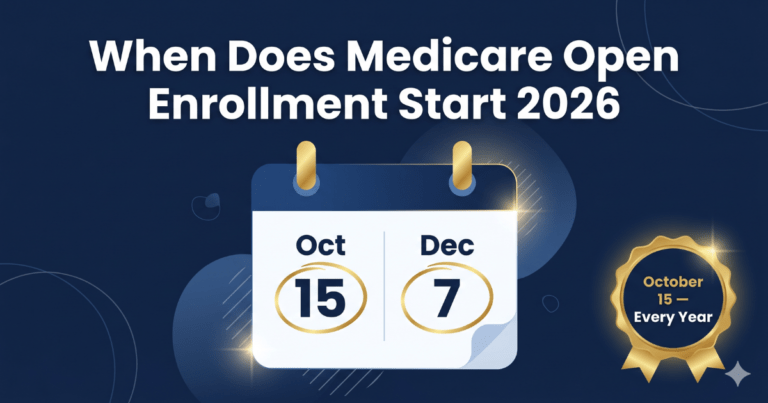
If your ANOC shows significant changes — meaningful premium increase, drug formulary changes affecting your medications, network changes affecting your providers, or major benefit reductions — use Medicare Open Enrollment (October 15 to December 7) to compare alternative plans and switch if a better option is available.
Action 3 — Urgent Action Required
If your ANOC shows your plan is leaving your service area your current coverage ends December 31. You must enroll in a new plan during Open Enrollment or you will default back to Original Medicare only. This requires immediate attention.
What Happens If You Do Not Read Your Annual Notice of Change?
Many Medicare beneficiaries throw away their Annual Notice of Change without reading it — sometimes mistaking it for junk mail. Here is what can happen if you ignore your ANOC:
You could face significantly higher premiums in January with no warning. Your medications could cost dramatically more because they moved to a higher formulary tier. Your doctor could be out of network under your new plan. Your dental or vision benefits could be cut substantially. Your plan could have left your service area leaving you without coverage.
All of these surprises are preventable — the Annual Notice of Change tells you everything that is changing in advance. Reading it takes 15 to 20 minutes and could save you hundreds or thousands of dollars.
Medicare Advantage vs Part D Annual Notice of Change
Medicare Advantage ANOC
If you have a Medicare Advantage plan your Annual Notice of Change covers all aspects of your plan — medical benefits, drug coverage (if your plan includes Part D), network changes, extra benefits, and cost-sharing changes. The Medicare Advantage ANOC is typically more comprehensive because it covers more types of benefits.
Part D Drug Plan ANOC
If you have Original Medicare with a standalone Part D drug plan your Annual Notice of Change focuses specifically on drug coverage changes — formulary changes, tier changes, premium changes, and deductible changes.
What If You Have Both?
If you have Medicare Advantage with embedded drug coverage you receive one ANOC covering all your benefits. If you have Original Medicare with a standalone Part D plan your plan sends you a Part D-specific ANOC.
Frequently Asked Questions — Medicare Annual Notice of Change 2026
What is the Medicare Annual Notice of Change 2026?
The Medicare Annual Notice of Change 2026 is a document your Medicare Advantage or Part D plan sends you before October 1 each year summarizing every change to your coverage taking effect January 1. It is required by law and shows your current coverage versus your new coverage side by side. Reading your Annual Notice of Change is the essential first step in reviewing your Medicare coverage during Open Enrollment.
When does the Medicare Annual Notice of Change arrive?
The Medicare Annual Notice of Change arrives before October 1 — most plans mail it in September. Watch your mail carefully in late September. If you have not received your ANOC by October 1 contact your plan directly. The ANOC must arrive before October 15 when Medicare Open Enrollment begins so you have time to review changes before comparing and switching plans.
What should I look for in my Annual Notice of Change?
The most important things to look for in your Annual Notice of Change are premium increases, drug formulary changes affecting your specific medications, provider network changes affecting your current doctors, extra benefit reductions, and any indication your plan is leaving your service area. These are the changes most likely to affect your out-of-pocket costs significantly.
What do I do after reading my Annual Notice of Change?
After reading your Annual Notice of Change compare your current plan against alternatives on Medicare.gov/plan-compare during Medicare Open Enrollment from October 15 to December 7. If your plan has changed significantly and a better alternative is available switch plans before the December 7 deadline.
Do I have to switch plans if my Annual Notice of Change shows changes?
No — you are not required to switch plans even if your ANOC shows changes. If the changes are minor or your plan still represents the best value for your situation you can stay with your current plan. Your current plan automatically continues into the new year if you take no action during Open Enrollment.
Summary — Medicare Annual Notice of Change 2026
The Medicare Annual Notice of Change 2026 is the most important document you will receive about your Medicare coverage all year. Read it immediately when it arrives before October 1 — it tells you exactly what will change about your plan on January 1 and gives you critical information to make smart decisions during Medicare Open Enrollment from October 15 to December 7.
Pay special attention to premium changes, drug formulary changes affecting your specific medications, network changes affecting your doctors, and extra benefit reductions. If your Annual Notice of Change shows significant changes use Open Enrollment to compare alternatives and switch if a better option exists.
For free help understanding your Medicare Annual Notice of Change contact your State Health Insurance Assistance Program (SHIP) at shiphelp.org or call Medicare free at 1-800-633-4227.
This guide is for informational purposes only and is not medical or financial advice. Always verify current Medicare coverage details at Medicare.gov.
Sources: Medicare.gov | CMS.gov | SSA.gov | AARP.org
Last updated: April 2026 | Author: James Carter, Independent Medicare Research Analyst